
🕐10 min read
In This Article
Bizarre Holidays & Events Calendar
365 weird, wonderful, and obscure holidays — perfect for content creators and conversation starters.
Disclosure: This post contains affiliate links. If you click through and make a purchase, we may earn a small commission at no extra cost to you. Thank you for supporting this site!
Benjamin Franklin spent an hour most mornings sitting stark naked by an open window, sometimes in the dead of a Philadelphia winter, and he swore it sharpened his mind for the day’s writing. He called it an “air bath,” described it in an August 1768 letter to French physician Jacques Barbeu-Dubourg, and apparently never caught a cold from it. Compare that to your current “creative ritual” — maybe a second cup of coffee and a scroll through your phone — and you start to wonder if the eccentrics of history were onto something we’ve politely forgotten. This isn’t a listicle of vague “wake up early and journal” advice. It’s a tour through genuinely documented, occasionally ridiculous daily practices from real historical figures, paired with what current research actually says about why weird works.
8 min read
In This Article
Key Takeaways
- The Surprisingly Weird History of Creative Rituals
- Meet the Ritual Obsessives
- What Actually Happened Behind Closed Doors
- The Truly Bizarre Details Historians Can’t Stop Citing
The Surprisingly Weird History of Creative Rituals
Here’s the part nobody mentions in productivity blogs: eccentric routines aren’t a modern wellness trend. They’re centuries old, and the historical record is stuffed with them because 18th- and 19th-century biographers loved gossiping about the private habits of “great men” almost as much as we love reading about them now. Friedrich Schiller, the German poet who died in 1805 at just 45, reportedly kept a drawer of rotting apples in his writing desk in Weimar because he claimed he couldn’t compose without the smell. His wife, Charlotte von Lengefeld, apparently kept the drawer stocked for him.

Ludwig van Beethoven, born in Bonn in December 1770, counted out exactly 60 coffee beans per cup each morning — a detail that comes from his secretary and early biographer Anton Schindler. Musicologists have since raised an eyebrow at Schindler’s reliability (he’s known to have fabricated other Beethoven anecdotes), so treat the exact number as “probably true, historically contested” rather than gospel. Still, multiple independent sources agree Beethoven was obsessive about his coffee ritual, whatever the precise bean count.
What ties Franklin, Schiller, and Beethoven together isn’t the specific weirdness — it’s the pattern. Each one built an unshakeable, slightly absurd trigger that told their brain “creative work starts now.” That’s not folklore. That’s habit architecture, decades before anyone coined the term.
That’s habit architecture, decades before anyone coined the term.
Meet the Ritual Obsessives
Charles Dickens (1812–1870) needed his writing desk arranged with mathematical precision: a small bronze statue of two duelling frogs, a gilt leaf holding a rabbit playing a fiddle, and his bed positioned so he slept facing north, because he believed it aligned him with magnetic currents that improved his sleep and, by extension, his prose. He also walked up to 12 miles a day through London, often at night, using the walks to plot novels like “Oliver Twist” while burning off what biographers describe as restless, borderline manic energy.

Then there’s Nikola Tesla, born July 10, 1856, in Smiljan (in what’s now Croatia) — a date some engineering clubs and science museums still informally mark as “Tesla Day.” Tesla was so fixated on the number 3 that he insisted on hotel rooms with numbers divisible by three, reportedly stayed in room 3327 at the Hotel New Yorker for the last decade of his life, and would walk around a city block three times before entering a building. He also calculated the cubic volume of his food before eating it. Historians debate how much of this was genuine obsessive-compulsive behavior versus embellished Tesla mythology, but the core details appear consistently across multiple biographies, including Marc Seifer’s “Wizard: The Life and Times of Nikola Tesla” (1996).
Victor Hugo reportedly had his servant hide his clothes so he’d be forced to stay at his desk in nothing but a shawl until he finished his writing quota for the day — a trick he supposedly used while drafting “The Hunchback of Notre-Dame” in 1830–31 under a brutal publisher deadline. Whether that’s fully verified or partly literary legend passed down through French biographical tradition is genuinely unclear, so file it under “probably happened, can’t fully confirm.”
Enjoy strange history?
Free weekly — no spam, unsubscribe anytime.
What Actually Happened Behind Closed Doors
The mechanics matter more than the mythology. Franklin’s air bath wasn’t random nudity — he was following contemporary medical theory (however flawed) that cold air “toughened” the body and cleared the mind, and he did it consistently enough to describe it as part of his daily writing regimen in his autobiography. Schiller’s rotten apples weren’t a quirky prop; they were, by his own account, a literal sensory trigger, the smell functioning the way a scented Candles or a specific playlist might for a modern writer settling into a work session.
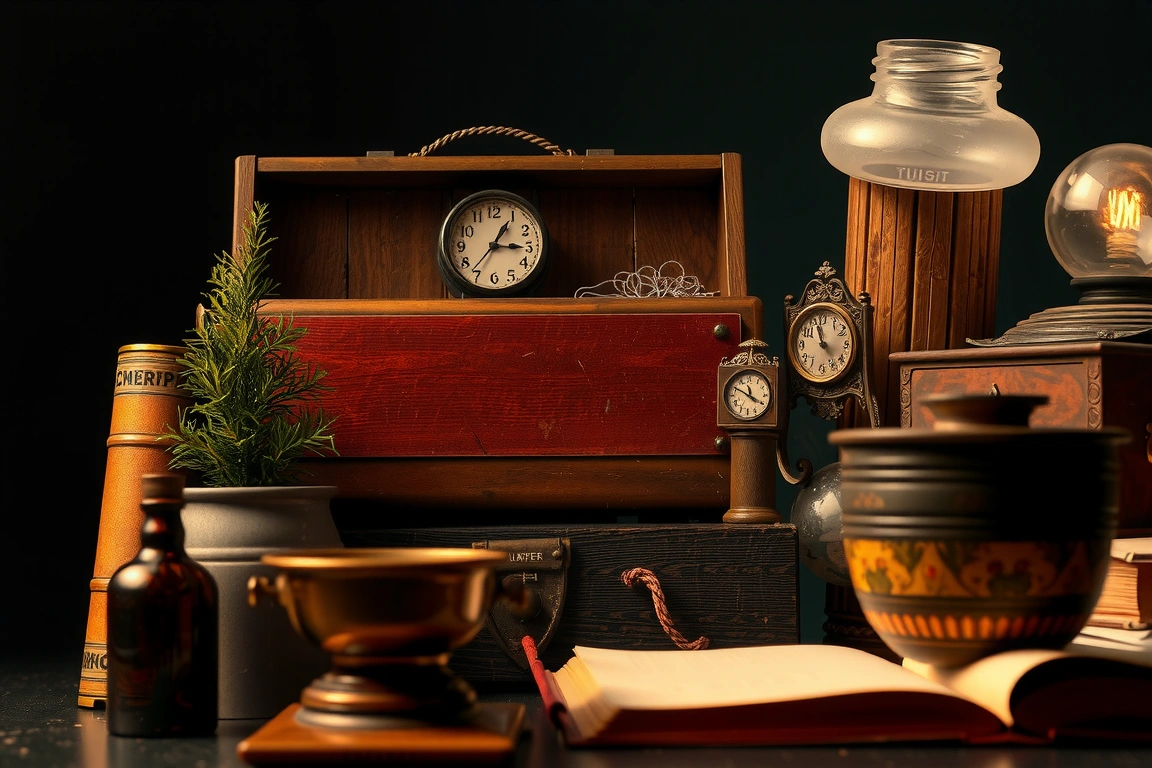
Beethoven’s cold-water ritual is the one biographers argue about most. Several accounts describe him pouring water over his head before composing, sometimes so much that it soaked through the floor into the apartment below — a detail from contemporaries that, if true, might connect to his documented hearing problems, though no serious medical historian claims this caused his deafness. It’s a good example of a story that’s colorful, partially verified, and worth repeating with a caveat rather than as settled fact.
Dickens’s compass-aligned bed sounds like pure superstition, and honestly, it mostly was. But the 12-mile walks were functional: they gave his brain unstructured time to work through plot problems, a technique modern neuroscience actually supports through research on “incubation,” the mental processing that happens when you stop staring directly at a problem. Graham Wallas formalized this in his 1926 book “The Art of Thought,” outlining four creative stages — preparation, incubation, illumination, verification — and Dickens was living stage two on foot a century before anyone named it.
Dickens’s compass-aligned bed sounds like pure superstition, and honestly, it mostly was.
The Truly Bizarre Details Historians Can’t Stop Citing
Salvador Dalí (1904–1989) documented his own strangest trick in his 1948 book “50 Secrets of Magic Craftsmanship”: he’d sit in a chair holding a key or spoon loosely over an upturned metal plate on the floor, then let himself doze off. The instant he fell into deep sleep, his hand would relax, the object would clatter onto the plate, and the noise would jolt him awake — right at the edge of the hypnagogic state, that fuzzy in-between zone between waking and sleeping where surreal images tend to surface. He claimed this “slumber with a key” technique fed directly into his paintings.

Here’s the part that should make you sit up: this isn’t just a painter’s party trick. A 2021 study published in Science Advances by Delphine Oudiette and colleagues at the Paris Brain Institute tested a version of Dalí’s method with actual sleep-lab equipment and found that people who woke from that same brief hypnagogic window solved a hidden math rule in a puzzle task nearly three times more often than people who stayed fully awake. Dalí had no MRI machine, no peer review, and no grant funding. He just paid obsessive attention to his own weirdness and turned it into a working method four decades before science bothered to check his homework.
Compare that to Tesla’s bowl-volume calculations or Dickens’s frog statues, and you notice something: the more precisely a person could describe their own ritual, the more likely it was to actually be doing something — even if the person’s explanation for why was completely wrong.
Modern Parallels: From Hotel Rooms to Hoodies
Maya Angelou described her writing ritual in a 1990 Paris Review interview: she rented a plain hotel room, had the staff strip every picture off the walls, and brought only a Bible, a deck of playing cards, a dictionary, and a bottle of sherry. She wrote lying across the bed, and she kept the same hotel on retainer in her hometown so the room would always be stripped and ready. That’s Franklin’s air bath and Schiller’s apple drawer wearing a mid-century American writer’s clothes — a deliberately engineered environment that signals “nothing exists here but the work.”
Choreographer Twyla Tharp, in her 2003 book “The Creative Habit,” describes her actual ritual as a single act: hailing a cab at 5:30 a.m. to go to the gym. Not the workout. The cab-hailing. She’s explicit that the ritual is the trigger, and everything after it is just consequence. It’s the clearest modern restatement of what Beethoven was doing with 60 coffee beans, minus the questionable secretary.
Tech-world versions get less poetic but no less specific: Mark Zuckerberg publicly explained in a 2014 Facebook Q&A that he wears functionally identical gray t-shirts to eliminate “trivial decisions” that drain mental energy for bigger choices — a real-world application of decision fatigue, a concept researchers like Roy Baumeister have studied since the early 2000s. Jack Dorsey has described in multiple interviews (including a 2019 appearance on Ben Greenfield’s podcast) a 5 a.m. routine involving meditation and cold exposure before running Twitter and Square on the same day. None of these people invented anything Franklin didn’t already try in 1768. They just have better PR.
Why This Actually Works (Or Doesn’t)
The psychological mechanism underneath most of this is called state-dependent or context-dependent memory and performance — the idea that your brain partly encodes information alongside the physical and sensory context in which you learned or created it. The classic proof is a 1975 study by Godden and Baddeley, published in the British Journal of Psychology, where scuba divers memorized word lists either on land or underwater and recalled them roughly 40% better when tested in the same environment they’d learned them in. Schiller’s rotten apples and Angelou’s blank hotel walls are the same principle running in reverse: build a specific, weird enough environment, and your brain learns to associate it exclusively with focused output.
Charles Duhigg’s 2012 book “The Power of Habit” describes this as the cue-routine-reward loop, and it explains why the strangeness of the ritual barely matters — a rotten apple works exactly as well as a fresh cup of coffee, as long as it’s consistent and exclusively tied to the behavior you want. What doesn’t work is treating the ritual as magic rather than mechanism. If you skip the actual writing, painting, or planning that the ritual is supposed to trigger, no number of coffee beans will save you.
It’s also worth being honest about the limits here. Several of these historical anecdotes come from secondhand biographers, servants’ memoirs, or self-mythologizing autobiographies, so the exact details (60 beans, three walks around the block) shouldn’t be treated as laboratory fact. What’s well-supported by actual research — incubation effects, decision fatigue, context-dependent recall, hypnagogic creativity — is the underlying mechanism, not necessarily every colorful anecdote layered on top of it.
Build Your Own Weird Ritual: A Field Guide
You don’t need rotten fruit or a hotel room on retainer. You need a trigger that’s specific, repeatable, and boring enough that your brain stops questioning it. Here’s a practical sequence based on what actually held up across the historical and research examples above:
- Pick one sensory anchor. A specific scent, a specific mug, a specific playlist under 20 minutes long — something your brain can’t confuse with anything else in your day.
- Attach it to one and only one activity. Franklin’s air bath was for reading and writing, nothing else. If your ritual gets used for emails, Netflix, and journaling, it stops signaling anything.
- Make the ritual itself under 10 minutes. Tharp’s cab-hailing took maybe two minutes. Long, elaborate rituals become procrastination in a trench coat.
- Track it for 21 days minimum, since habit-formation research (commonly citing Phillippa Lally’s 2010 study in the European Journal of Social Psychology, which found habits took a median of 66 days, not the popularized “21 days” myth) suggests real automaticity takes longer than internet wisdom claims — so don’t quit at day 22 expecting fireworks.
- Log the weird version alongside a normal week in a bullet journal or simple notebook spread, comparing output or word count. Franklin and Angelou both kept detailed personal records; you should too, if only to prove to yourself it’s working.
If you want a lower-stakes place to start, this pairs naturally with a habit tracker spread — log the ritual, not just the output, and you’ll start noticing which triggers actually move your creative needle versus which ones just feel productive.
Start small: pick one weird trigger
Small changes, real momentum
Get practical guides and templates you’ll actually use — a few thoughtful emails a month.
You Might Also Like


Every Date Has a Story
The strange, forgotten, and world-changing events behind every day on the calendar. Delivered weekly.
No spam. Unsubscribe anytime.
